Hospital Information System (HIS)
Support in setting up a functional, compliant digital hospital environment, tailored to your teams.
What is a modern HIS?
A Hospital Information System is a set of digital tools that structures, secures and streamlines the flow of information within a healthcare facility.

Our position: architect, not vendor
We do not develop proprietary software. Our role is to support the selection, implementation and document structuring around an HIS that suits your facility.
We work with recognised vendors and select the most coherent solution for your size, constraints and budget.
The specific challenges of the healthcare sector
Healthcare facilities face unique constraints: massive volumes, sensitive data, strict legal obligations.

Hospital document architecture
Implementing an HIS generates a large volume of data. It must be accompanied by an overall document strategy.
Document strategy
- Retention periods by document type
- Archiving policy
- Document flow management
- Secure destruction plan
Hybrid solution
- Physical archiving of originals
- On-demand digitization
- EAS - Digital archiving
- Urgent access 24/7
Related services
- Outsourced archive centre
- Retrospective digitization
- Outsourced flow management
- Staff training
Every document in your facility
Essential features of an effective HIS
These modules are generally available from most vendors on the market. Our role is to make sure they are properly configured and consistent with how your facility really works.
Admissions and patient identity management
- Creation and updating of patient records
- Assignment of a unique identifier
- Visit history tracking
- Management of administrative information
Electronic Patient Record (EPR)
- Medical consultations
- Reports
- Prescriptions
- Test results
- Nursing observations
Care and resource planning
- Practitioners' schedules
- Inpatient management
- Room allocation
- Availability tracking
Administration and billing
- Automatic invoice generation
- Payment tracking
- Management of medical procedures
- Financial reporting
Access management and security
- Role-based user profiles
- Permission control
- Action logging
- Full traceability
How we work
A proven method for a controlled and realistic implementation
Needs analysis
Audit of existing processes and identification of priority departments
- Audit of existing processes
- Mapping of administrative and medical flows
- Identification of priority departments
- Assessment of digital maturity
Key deliverables:
Audit report, process map, identified priorities
Selecting the right vendor
We work with specialist software vendors and select the solution that fits your facility
- Analysis of the solutions on the market
- Selection by size and budget
- Fit with the identified priorities
- Technical compatibility
Key deliverables:
Selected solution, technical proposal, provisional schedule
Phased roll-out
Installation, configuration and testing in controlled phases
- Installation of the modules
- Tailored configuration
- In-depth technical testing
- Validation by a pilot department
Key deliverables:
Modules installed, configuration validated, successful tests
Staff training
Short sessions, training by department, clear documentation
- Sessions by department
- Hands-on training based on real use
- Simplified user guides
- Quick onboarding
Key deliverables:
Trained teams, user guides, skills development
Go-live
Launch support and initial assistance
- Gradual launch
- Close technical support
- Post-deployment adjustments
- Monitoring of early use
Key deliverables:
Operational system, active support, post-deployment follow-up
Security and data protection
Medical data is sensitive by nature. A properly implemented HIS must include robust protection mechanisms.
Security is not an add-on module: it is built in from the start of the project.


Integration with your existing environment
In most cases, a facility already has business tools that should not be systematically replaced.
We ensure compatibility and consistency between the HIS and these tools. The aim is not to replace everything, but to unify what needs to be unified.
Phased or global approach
Every facility has its own pace. We adapt to your context.
Phased roll-out
- Department by department
- Module by module
- Pilot phase before general roll-out
- Controlled learning curve
- Possible adjustments along the way
Suited to facilities that want to limit disruption.
Global roll-out
- Simultaneous implementation
- Planned switchover
- Tight schedule
- Intense but short mobilisation
- Immediate consistency
Suited to facilities ready for a fast transition.
Strategic benefits for the facility
Beyond operational gains, a well-designed HIS strengthens governance and management
Better management capability
Consolidated indicators for a clear strategic view
Audit readiness
Full traceability and structured documentation
Institutional image
Modernisation perceived by patients and partners
Legal certainty
Compliance with legal obligations and reduced risk
Areas of application
Our support is aimed at every type of healthcare facility
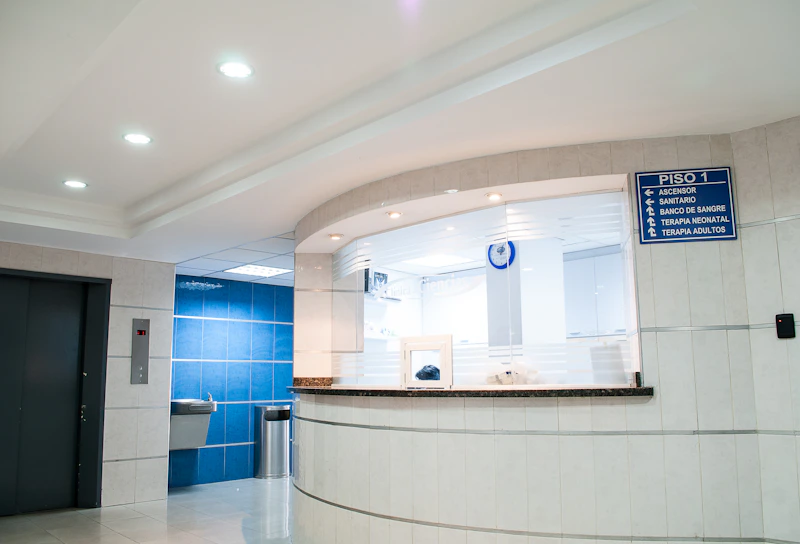
Public hospitals

Private clinics

Medical and social care facilities
What comes after the HIS is in place?
Structuring the information system naturally opens up other essential projects
Launch an HIS orientation study
Implementing a Hospital Information System requires a clear vision, realistic planning and methodical support.
We offer a preliminary study to assess:
This first step lets you decide with full knowledge of the facts.

Start an HIS orientation study
Every facility has its own constraints and priorities. A structured preliminary study assesses feasibility and identifies the most coherent strategy for your organisation.